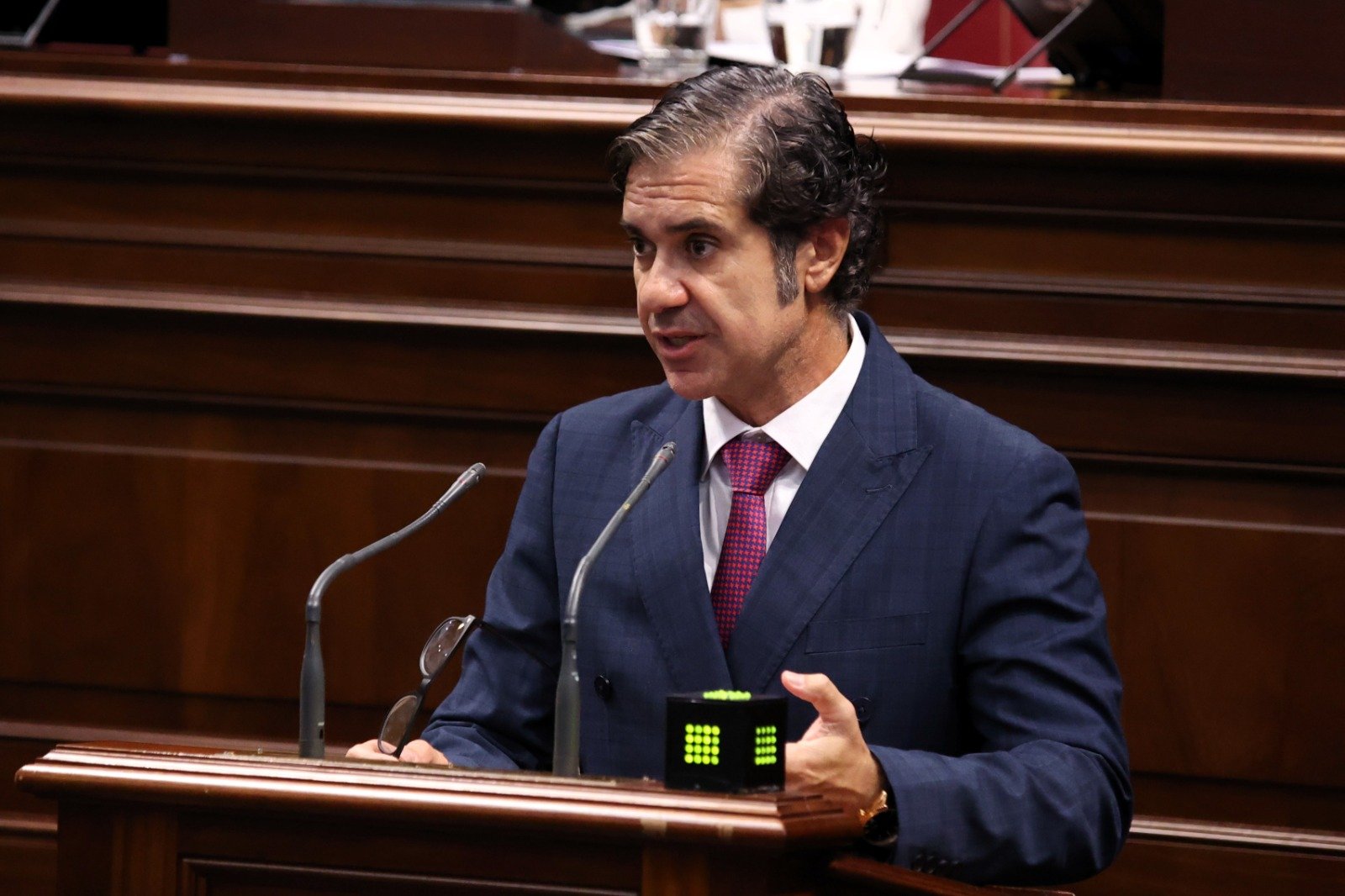
Carmen Hernández is committed to moving the eighth sectoral norm of democracy away from the partisan and confessional battle
The parliamentary spokesperson of Nueva Canarias (NC) on educational matters, Carmen Hernández, requested today, in the control session from the Government, a State pact for the new Organic Law for the Reform of the Organic Law of Education (Lomloe). The deputy of the progressive nationalist group defended the need for the eighth sectoral norm of democracy to move away from the “partisan and confessional” battle to become a proposal for the entire Spanish society.
During the question period to the Progress Executive and before the upcoming start of the processing of the Lomloe bill in the Cortes Generales, Carmen Hernández welcomed the proposal of Minister Isabel Celaá with the statement that, “if there was consensus on something” in the educational community, it was on the need to “repeal” the Wert law, the Lomce of the PP, approved seven years ago. It was born “badly”, it was a “deeply segregating” proposal and because, as the nationalist spokesperson pointed out, the laws should not be partisan but a reflection of society.
But in addition to abolishing the Lomce, the value of the bill that will now begin its processing in the Congress of Deputies, is that it “modernizes” the LOE, according to Carmen Hernández. For Nueva Canarias, it introduces such important aspects as equity and excellence, is committed to Vocational Training (FP) and, in a “decisive way”, to early childhood education from zero to three years in addition to updating the system of access to the teaching function.
This bill, Hernández continued, seeks to place the Spanish State among the countries with the best educational level, according to the guidelines of the Organization for the Economic Cooperation and Development (OECD). Although it is born with a “reasonable” consensus, in the opinion of the NC spokesperson, “we must not abandon” the objective of a “great State pact.”
Carmen Hernández advocated for “not generating instability” in the system and for “stopping seeing” education as an element of social “division.” The progressive nationalists, he observed, are committed to distancing this legislative proposal from the “partisan or confessional” battle and from those who seek “ideological or electoral benefits.”
For Carmen Hernández, the eighth educational law of democracy should not be a norm of the PSOE or another political organization but of the entire society. The NC parliamentarian defended the importance of listening to the State School Council and parallel autonomous bodies.