The meeting will be held from November 19 to 21 with the participation of professionals and agents linked to the museum and heritage field
The program will be articulated in three thematic blocks: Narratives and media, Around objects and Context and interaction, focused on technological challenges, collection management and the relationship of museums with society.
The event will promote the exchange of experiences between the islands and collective reflection on the role of museums in education, cultural identity, sustainability and the development of their communities.
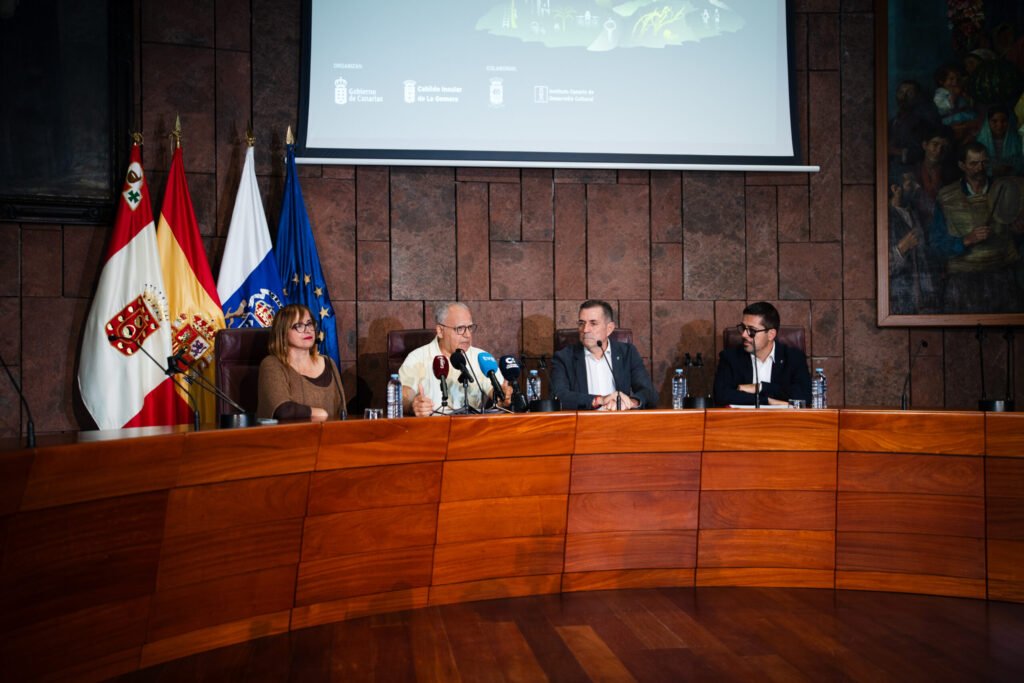
The museums of the Canary Islands will meet in La Gomera from November 19 to 21 for the V Congress of Museums of the Canary Islands, a call that will open a space for reflection and debate on the challenges faced by these institutions in a context of profound social, cultural, technological and territorial transformations. All the information, as well as registration, is operational on the website: https://www.congresodemuseosdecanarias2026.com/. In addition, it can be followed online through the Cultural Heritage of the Canary Islands YouTube channel.
Under the motto “The museums of the Canary Islands in a changing time”, the meeting will address the present and future of the sector from the experience of the centers of the archipelago, taking into account the diversity of museum models and the particularities of each island. The objective is to share knowledge, contrast professional practices and identify lines of work that allow us to respond to the new needs of museums and citizens.
The president of the Cabildo of La Gomera, Casimiro Curbelo, highlighted that “hosting this congress is an opportunity to claim that the future of the museums of the Canary Islands must be built from all the islands, taking into account their singularities and guaranteeing access to culture regardless of place of residence.” In this sense, he stressed that “the museums and interpretation centers of La Gomera play a fundamental role in the conservation of our memory and in the transmission of our traditions to new generations,” and pointed out that this event will allow “sharing experiences and strengthening cooperation between institutions to bring heritage closer to citizens and make them participate in its conservation.”
Miguel Ángel Clavijo highlighted the importance of paying special attention to small, local and rural museums, which “constitute an essential part of the museum ecosystem of the Canary Islands.” In this sense, he noted that the meeting seeks to "facilitate the exchange of experiences and joint reflection between professionals and institutions from across the archipelago, taking into account the diversities and particularities of each island." Furthermore, the general director of Culture and Cultural Heritage expressly thanked the Council for its involvement and willingness to collaborate in the organization of the congress.
The program will be structured around three large thematic blocks: Narratives and media, Around objects and Context and interaction. These areas will allow us to analyze issues such as communication and education in museums, the responsible use of technologies, the conservation and management of collections, security, access to information, sustainability and cooperation between institutions.
The methodology will combine round tables or simultaneous discussions with plenary sessions of joint debate. The three planned work sessions will include spaces to delve into specific issues, share experiences and share conclusions. Likewise, the plenary tables will allow the presentation and defense of communications related to the contents of the congress.
The three thematic axes are presented as complementary areas to examine the challenges of the contemporary museum and its capacity to adapt. The reflection will cover both the incorporation of new tools and forms of communication and the need to make heritage conservation compatible with its social and educational function, in addition to reinforcing the links between museums and their environment.
La Gomera, territory and community
The choice of La Gomera as the venue offers a particularly suitable framework to address the relationship between cultural heritage, landscape, collective memory and community. The island reality allows us to delve deeper into the role of local museums, especially linked to oral memory, intangible heritage and the daily dynamics of the population.
The congress will pay attention to the work of the technical teams and the group of professionals who support museum activity, as well as the experiences of centers that, beyond visitor numbers, contribute to education, the transmission of knowledge and social cohesion.
The call will also promote dialogue with citizens and cultural agents, with the purpose of analyzing how to incorporate communities into the definition, management and programming processes of museums. This perspective will allow sharing the experiences developed on the different islands, identifying needs and promoting new avenues of cooperation.
The V Congress of Museums of the Canary Islands is thus configured as a shared work space to reflect on the role of these institutions in today's society and explore responses to the changes that affect heritage, its forms of conservation and dissemination and the relationship of museums with their audiences.