The Canary Islands are preparing for the transformation of the judicial system that will be launched in the near future
Julio Pérez attends the Justice Sector Conference in Toledo in which he was informed of the status of processing of the bills that will promote a substantial change in this matter
The Minister of Public Administrations, Justice and Security recalls the need to adapt the planned reforms to the island geography of the archipelago
It expresses its confidence that the future municipal judicial offices will entail significant improvements in the work carried out by the former justices of the peace.
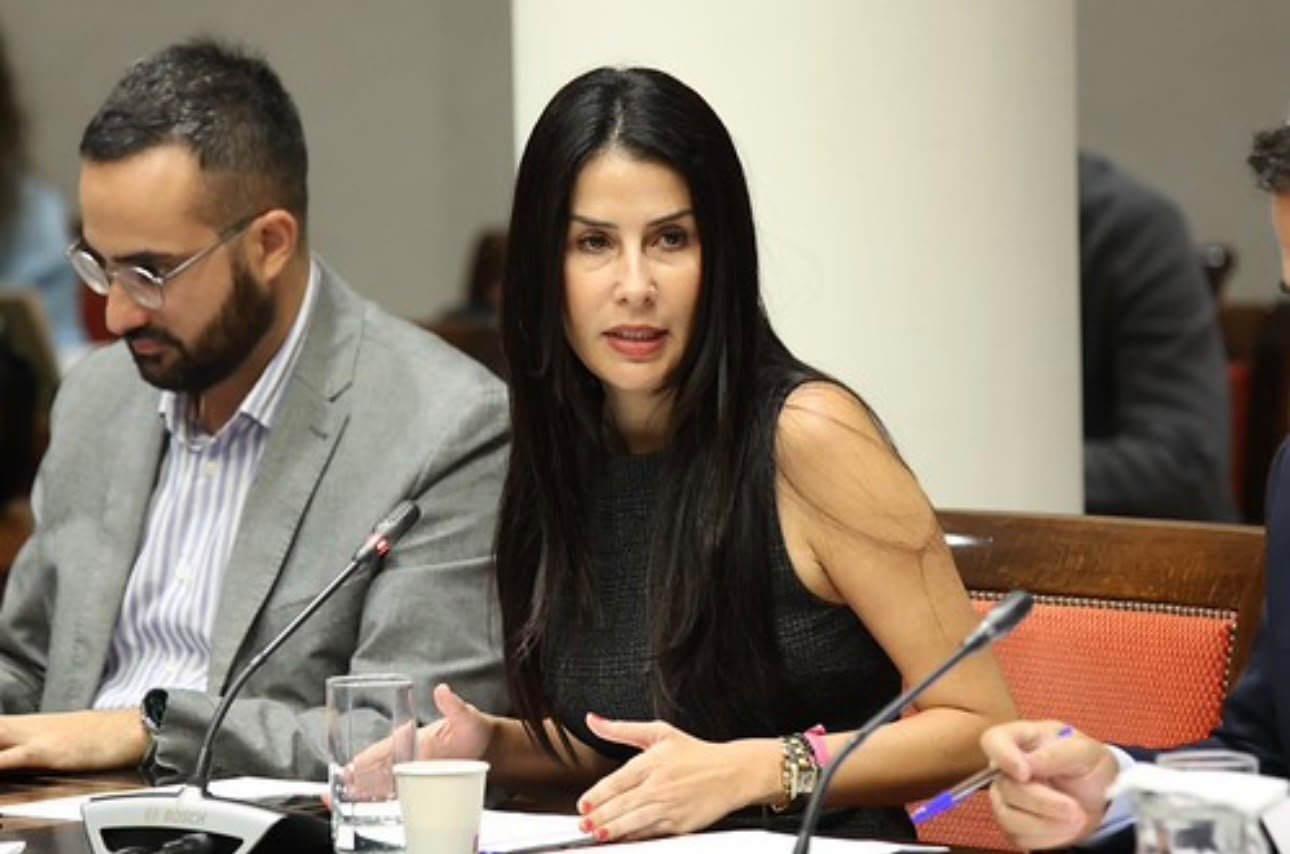
“The Canary Islands are preparing for the transformation of the judicial system that will be launched in the near future,” as stated this Thursday by the Minister of Public Administrations, Justice and Security of the Canary Islands Government, Julio Pérez, at the end of the Justice Sector Conference held in Toledo, chaired by Minister Pilar Llop, which he attended accompanied by the Deputy Minister of Justice, Carla Vallejo, and the General Director of Relations with the Administration of Justice, Mónica Ceballos.
Julio Pérez has stated that the Sectoral Conference had been informed of the status of processing of the bills that are going to "promote a substantive change" in the functioning of justice, which are, he explained, the draft Law on Procedural Efficiency, Organizational Efficiency and Digital Efficiency in the Administration of Justice, all of them, except for the latter, which is expected to soon begin its passage through the Cortes, in the parliamentary processing phase.
In the same session, the status of execution of the projects financed with European funds aimed at improving justice was analyzed, of which the Canary Islands has received more than 25 million euros, and which, as established in the program agreed by the autonomous communities and the Ministry of Justice, must be allocated to the acquisition of technological infrastructure, to homogeneous services, through which the procedural management systems of each autonomous community are intended to be developed, guaranteeing a series of common services that allow integrated and effective telematic management; and cybersecurity projects.
The Sectoral Conference has also approved the so-called Data Manifesto, which contains the principles on which to build a public data space in the judicial sector, which will enable, said the Minister of Public Administrations, Justice and Security, "direct knowledge, not only for legal operators, but for anyone, of all the data in the sector, and will make it possible to evaluate the degree of correctness and possible deficiencies of public policies in matters of justice."
Among the objectives of this manifesto are directing the management of the Justice system as a data-oriented model, promoting innovation and improvements in the public Justice service, channeling the governance system and public space through data, and promoting social and territorial cohesion.
“Data must be a means that helps us define, design and refine public policies on Justice much more, using adequate resources to implement the new Justice model,” stressed Minister Pilar Llop.
judicial office
In addition, the first steps have been debated and taken for the implementation of what will be called municipal judicial office, with the aim of helping to overcome gaps in public access to Justice and reinforcing the fundamental right of effective judicial protection. Julio Pérez has expressed his confidence that it will lead to “significant improvements” in the work carried out by the old peace courts, which will be transformed into judicial offices.
This progress is part of the Justice 2030 plan/Transformation and Resilience Recovery Plan (PRTR) for the implementation of the new organizational model of the public Justice service. The judicial office is a figure included in the draft Organizational Efficiency Law, approved by the Council of Ministers last April, which has among its functions to be a single access door to Justice for citizens.
The scope of this new measure includes the 431 judicial offices associated with the Courts of Instance corresponding to the 431 judicial districts established throughout the state territory.
In this sense, the Minister of Justice recalled that "we are awaiting parliamentary approval of the efficiency laws that support the great modernizing and transforming project of the Administration of Justice. Justice is a power, but Justice is also a public service that we want to be at the level of the public educational service or the public health service, and the deployment of municipal justice offices will make it available to citizens."
Llop has been convinced that “there is nothing as socially and territorially cohesive as any citizen, wherever they are, being able to access Justice resources.”
Among the general services that the new Judicial Office will incorporate are attention to the public, professionals and operators; the victim assistance service, with the aim of offering assistance by understanding their needs and providing an agile and effective response in accordance with current regulations, protocols and procedures; as well as the service of implementation and promotion of adequate means of dispute resolution (MASC), in order to inform about the nature of the MASC, its content, effects of its use and existing resources.
The judicial office also plans to provide registration and distribution services, coordination services for signaling and control of summonses and summons, and processing services in the execution of the procedure and coordination with the Civil Registry, among others.
On the other hand, the Minister of Justice has also announced the constitution of a committee to prepare the European presidency in matters of Justice with the autonomous communities (CCAA) with transferred powers and the Spanish Federation of Municipalities and Provinces.
Interoperability
In the context of the Sectoral Conference, the minister announced that, “after many years, all procedural management systems, all seven, are interoperable with the Supreme Court.”
Llop has indicated that this advance is “an important novelty,” and added that the Administration of Justice had been “waiting for it and working on it for many years.”
In this sense, the minister highlighted that it is "a first big step to advance interoperability and in that technological dialogue that must exist between all the procedural management systems of the different territories."
Scholarships promoted by the Ministry of Justice
On the other hand, the package of scholarships for the preparation of competitive examinations for judges, prosecutors, lawyers of the Administration of Justice and State lawyers promoted by the Ministry has also been addressed.
The 245 scholarships, which have already been announced, have an endowment of 1.6 million euros. Of these, 173 will be dedicated to preparing for judicial and prosecutorial careers, 60 for the body of lawyers of the Administration of Justice and the remaining 12 scholarships will be used to prepare for competitive examinations for the body of State lawyers. Each scholarship is endowed with 6,611 euros per year.
As on other occasions, the Minister of Public Administrations, Justice and Security intervened to remind that the organizational model implemented with the planned reform must adapt to the island geography of the Archipelago. Given the celebration of the next sectoral conference, which will take place in November, Julio Pérez has positively valued the continuity of the territorial co-governance regime achieved during the meetings that have been held.
At the meeting with the autonomous communities, the minister was accompanied by the Secretary of State for Justice (SEJ), Tontxu Rodríguez, on behalf of the Ministry of Justice; the general secretary for Innovation and Quality of the Public Justice Service, Manuel Olmedo; the general director of the Public Justice Service, María dels Àngels García Vidal; and the general director of Digital Transformation of the Administration of Justice, Aitor Cubo, among other authorities.