The president of the Gomera Socialist Group Parliamentary Group (ASG), Melodie Mendoza, announced this Tuesday that she will collect information from the competent area to contrast the deficiencies exposed by the lawyer Margarita López Anadón about the child protection system and to know the results of the family reintegration processes. The deputy expressed reservations about some of these assessments and defended the need to have official data before drawing conclusions.
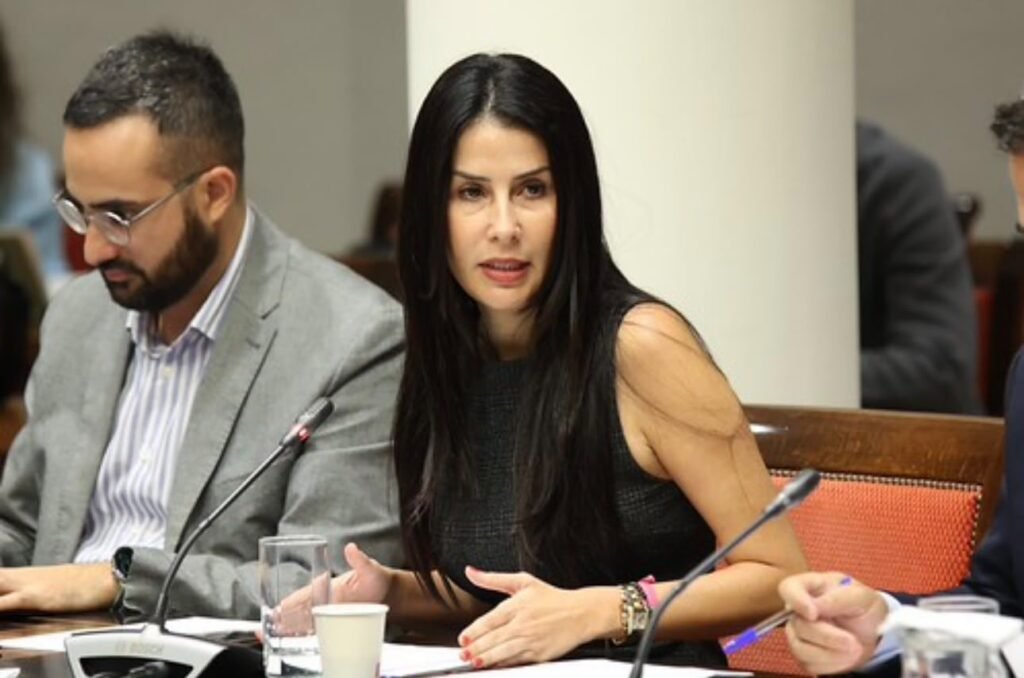
During the appearance of the specialist in family law and child protection in the study commission on child poverty in the Canary Islands of the regional Parliament, Melodie Mendoza thanked her for her contributions and recognized the interest in knowing her professional experience on family separation decisions and the guarantees for their subsequent review.
The president of the ASG Parliamentary Group expressed concern about the difficulties described by the speaker in relation to the extension of files, the updating of family assessments and the obstacles that some parents encounter in proving changes in their circumstances. However, he indicated that some of these statements seemed far from reality and required verification.
“Since I don't have the real data, I'm not going to refute it either,” said Melodie Mendoza, who announced that she will delve deeper into these issues to understand their scope and contrast the assessments conveyed to the commission.
The parliamentarian stressed that a protection measure can be fully justified when it is adopted, without this implying that the circumstances that motivated it remain unchanged. For this reason, it was interested in the review of decisions and in the guarantees for families to participate in the procedures, paying special attention to their consequences for minors.
In relation to family reintegration, he announced that he will request information on the results of intervention programs with families of origin. The ASG deputy warned that the judge's assessment of its low effectiveness had not been accompanied by official data that would allow the extent of this situation to be determined.
Likewise, she undertook to gather information about the visitation and communication regimes during foster care, after the lawyer questioned her ability to preserve family ties in those cases in which they are beneficial for the minor. “We will look for the data and information to know and compare it,” he stated.
Melodie Mendoza also asked for concrete proposals for improvement regarding review deadlines, updating of reports, specialized legal assistance and mechanisms for monitoring decisions. “For us it is important to listen to all points of view,” he said, showing willingness to study contributions that allow us to reinforce the guarantees of these procedures.
In the same commission, during the appearance of the director of the Canarian Institute of Statistics (ISTAC), Sergio Alonso Rodríguez, and the head of the Social Statistics section, Vanessa del Pino González García, the deputy valued the work of the organization and the availability of specific information on childhood.
The ASG representative asked about the possible limitations in obtaining indicators of child poverty in the non-capital islands with smaller populations and about the improvements necessary to overcome them, a question of special interest to understand the reality of territories such as La Gomera.
Finally, he proposed facilitating a joint presentation of the measurements that use regional and national thresholds to correctly interpret their differences. Melodie Mendoza defended that the commission's conclusions be based on “rigorous and comparable information” and was interested in new statistical tools that would better guide public policies aimed at children.