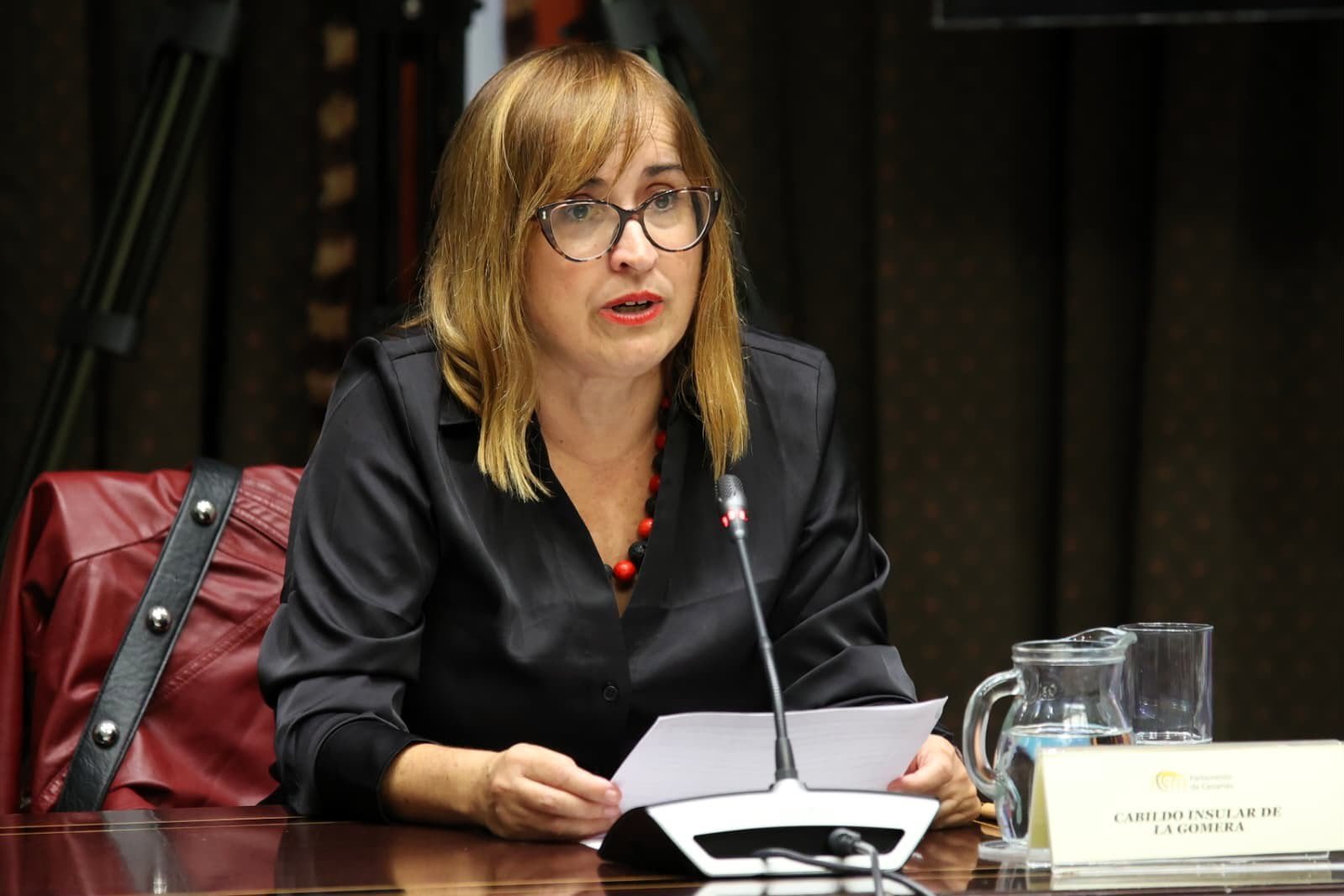
· Counselor Ruth Acosta demands that the Government group put more effort into “demonstrating the real commitment of this Council to develop training and employability programs that promote sustainable, quality employment committed to the environment.”
The insular group Sí Podemos Canarias (SPC) in the Cabildo of Tenerife, through counselor Ruth Acosta, has requested that the corporation review the criteria established in the training courses for the promotion of employment offered by the institution, since Sí Podemos Canarias considers that “the Government group has not yet effectively fulfilled its commitment to promote green employment in Tenerife, a proposal that our group took to the last plenary session of debate on the state of the Island and we were approved institutionally.”
Ruth Acosta has stated that "recently the Cabildo has announced a course to promote employment through which unemployed people can train in building maintenance, but we have observed that, among the points offered by this training program, the energy efficiency criteria for building maintenance are not taken into account, something that is fundamental."
The island councilor of SPC defends that "the corporation institutionally agreed that serious work would begin to promote economic recovery through green and sustainable employment on the Island, and we consider it essential that this is also exemplified by carrying out specific courses to promote sustainable employment on the Island."
"The Cabildo of Tenerife must put into practice the real promotion of green employment, and it cannot be that in the design of some training programs this aspect is being left aside, which, for our group, is fundamental." Acosta considers that training for building maintenance “is just an example of the little interest that the institution is showing to truly convert sustainability and commitment to the environment into one of the backbones of employment policies.”
Sí Podemos Canarias demands that the Government group put more effort into "developing actions that truly reflect the commitment of this Council to this labor and economic model through, for example, the teaching of mechanics courses for electric cars, something that they should already be doing if they really believed in green employment and the electrification of our mobility on the Island; or the increase in training aimed at the installation of renewable energies, something that our group also proposed in the island plenary session so that all the facilities of the Council to be self-sufficient with clean energy and that was approved unanimously.”