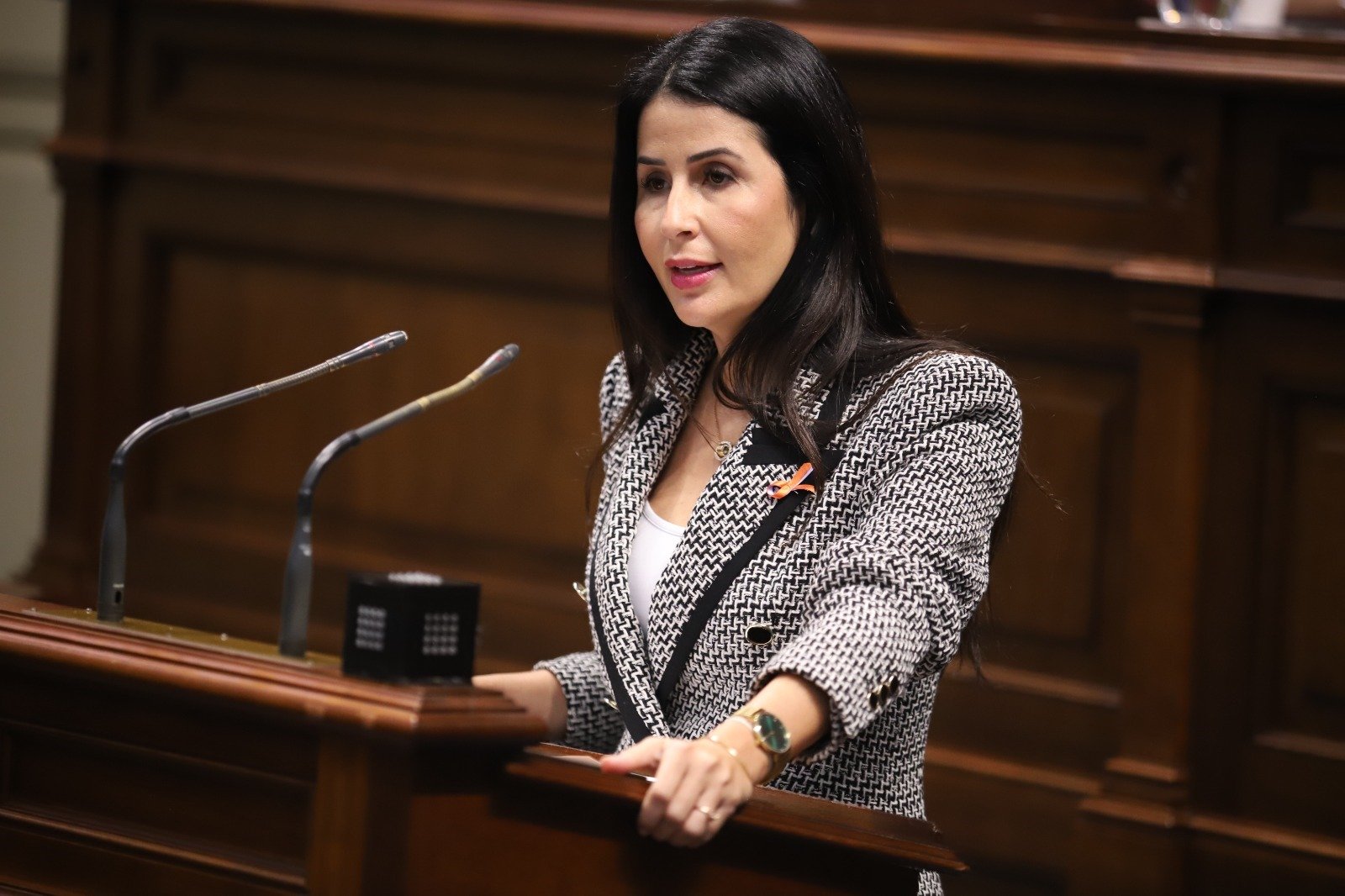
Counselor David Carballo highlights that “from now on, migrants residing in Tenerife will have the necessary institutional framework that will allow them to directly manage their demands.”
Last Friday, during the plenary session of the island corporation, the Sí Podemos Canarias group in the Island Council of Tenerife obtained approval of its proposal for the Council to initiate the necessary procedures for the creation of the Island Council of Good Practices in Foreign Action and Migrants. David Carballo, insular advisor of the Sí Podemos Canarias group, has declared that this agreement “is good news both for the Cabildo itself, and for all migrants residing in Tenerife, since the institution will finally have a forum in which to properly address the demands of these groups.”
The Yes We Can Canary Islands proposal - approved by a majority with the support of PSOE, Cs and PP, and with the dissenting vote of CC - contemplates that this Island Council be made up of a broad participation of the Networks of Collectives of Migrant Persons of Tenerife, experts in international cooperation and human rights, as well as non-governmental organizations. In this sense, Carballo has highlighted the importance that, for the first time, “the Networks of Migrant Collectives can convey their interests to the Tenerife Council, through their own voice and without intermediary parties.”
David Carballo highlights that the functions agreed for this Island Council "will deal with the matters of International Cooperation and cooperation for development, within the Foreign Action of the Council; actions that guarantee the defense of the human rights of all people, especially the most vulnerable; offer support to Migrants, with the help and participation of the Networks of Migrant Collectives."
Carballo considers that the Cabildo "has long had to assume its responsibility in this regard, ensuring the sustainable development of the countries around us and respect for the declaration of human rights; as well as putting an end to the neocolonial policies acquired and normalized by the institutions and, therefore, by society, which today continue to treat migrants as second-class people."
“Migrants residing in Tenerife have survived until now thanks to the implementation of informal processes of social collaboration and mutual support, with the mediation in some cases of NGOs, something that from now on will change so that they have the necessary institutional framework that allows them to represent themselves to directly manage their demands.”