Pedro Quevedo demands respect for international legality, absolute certainty that illegitimate instruments are not used against the other State and transparency
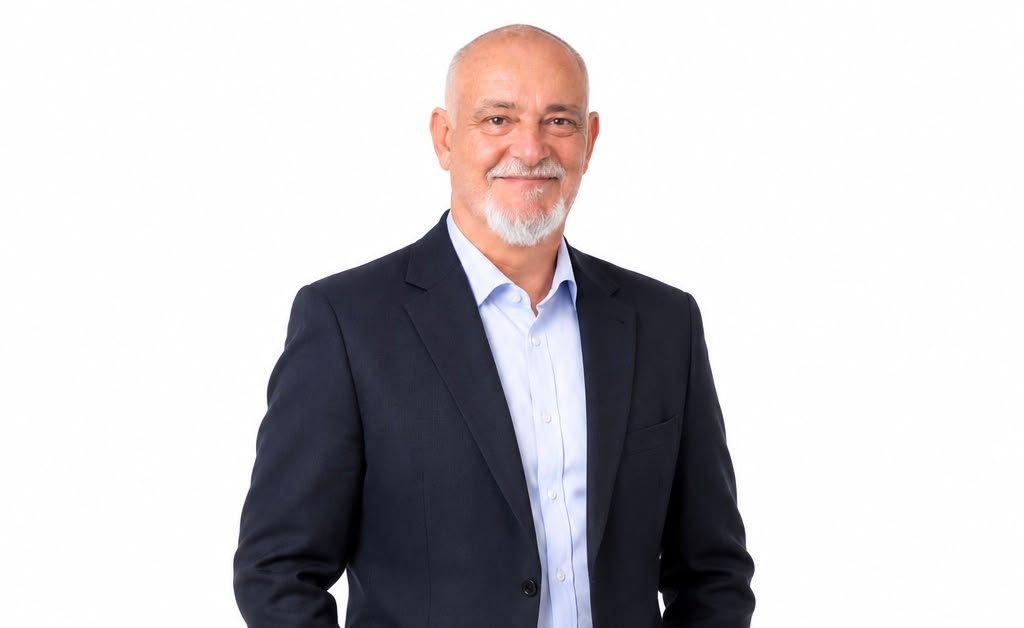
The representative of Nueva Canarias (NC) in Congress Pedro Quevedo demanded the reestablishment of the necessary trust in Spanish-Moroccan relations to address pending issues between both states that affect the Canary Islands. The NC spokesperson in the Lower House demanded respect for international legality, absolute certainty that illegitimate instruments are not used against the other State, transparency and dispelling any doubt about Alawite territorial concerns over the Archipelago.
This approach was presented by Pedro Quevedo before the next plenary session of the urgent interpellation requested from the Government of Pedro Sánchez regarding the demand for the delimitation of the Canary Islands waters after the reactivation of oil prospecting in Moroccan territory, off the coasts of Lanzarote and Fuerteventura, as well as the recent surrender to the blackmail of the Alawite kingdom by Sánchez, expressed with support for the Alawite autonomist plan for Western Sahara in against the United Nations resolutions in favor of the self-determination referendum of the Sahrawi people. All of this is now involved in the case of espionage against the head of the state Executive and several ministers in his cabinet with the Pegasus system, as well as other politicians.
The NC deputy proclaimed that, in the relations between Spain and Morocco, “the first thing” is to reestablish the conditions of trust “necessary” to advance any type of agreement on the pending issues between both states and that link the Canary Islands.
The spokesperson for the progressive Canaristas affirmed that common issues must be governed by transparency, the guarantee that illegitimate instruments are not used against the other State, respect for international legality and “clearing” doubts about the territorial desires of the Alawite kingdom over the Archipelago.
Quevedo pointed out two issues with Morocco related to maritime spaces and a third, more general one, related to migratory flows. With respect to maritime space, he maintained the need to delimit the Canarian and Alawite space. A decision always postponed, in the opinion of the nationalist spokesperson, due to the disinterest of both states, linked to the territorial desires of the African kingdom. He observed that recognizing the median implies acceptance that the waters are from another State and from the Canary Islands, “too.”
With the reactivation of oil prospecting in the waters of Rabat, Nueva Canarias demands the establishment of the median. A matter of “extraordinary concern.” Quevedo indicated that Spanish legislation prohibits these activities and that “the ideal thing” is to propose alternative forms of energy production between the two countries. Although they are made in the kingdom of Mohamed VI, the NC congressman warned that, if an accident occurs, the damage will be for the Canary Islands.
The second issue in this matter, he added, is defined by the Moroccan "insistence" in using the coasts and sea of Western Sahara which, as he again denounced, "are not their own, violating international law."
The first issue is resolved, according to Quevedo, with an agreement between states. The second, he continued, “making it clear” at the international level, and with the active involvement of the Spanish State, that Morocco “does not represent” the interests of Western Sahara and that “it has no authority” over those coasts. Recognize the right of self-determination of the Sahrawi people and return to the resolutions of the United Nations, the congressman insisted.
The unilateral appropriation of a territory, of waters that do not belong to Rabat and that also affects the interests of the Canary Islands is an “aggression,” accused the NC deputy. But the international law of the sea does not work that way, as he warned. “There has to be an agreement between states” and, if not, “it will not prosper.”
With respect to the third issue, of a general nature, related to migratory movements; He assured that it is a common policy that is part of the agreements of the European Union with Spain. He was categorical in assuring that compliance with Alawite obligations “were already” in force previously. “Now it is about reinforcing” them, he stated.
To work on the possibility of reaching agreements, Pedro Quevedo said that Nueva Canarias considers “essential” the participation of the Archipelago in the negotiations on migration matters and for the delimitation of waters. It also supports the State establishing joint border control missions, as exist in Mauritania and Senegal, also aimed at preventing the Atlantic from becoming, “more than it already is, a real” cemetery.