The first vice president and insular advisor of the Interior Regime and Insular Heritage of the Cabildo, Adasat Reyes, values the rapid response of the Government of the Canary Islands to contain the impact of rising energy and logistics costs on the islands

The insular Corporation warns of the possible decrease in the Canarian financing block and asks to maintain sufficient resources if international instability continues
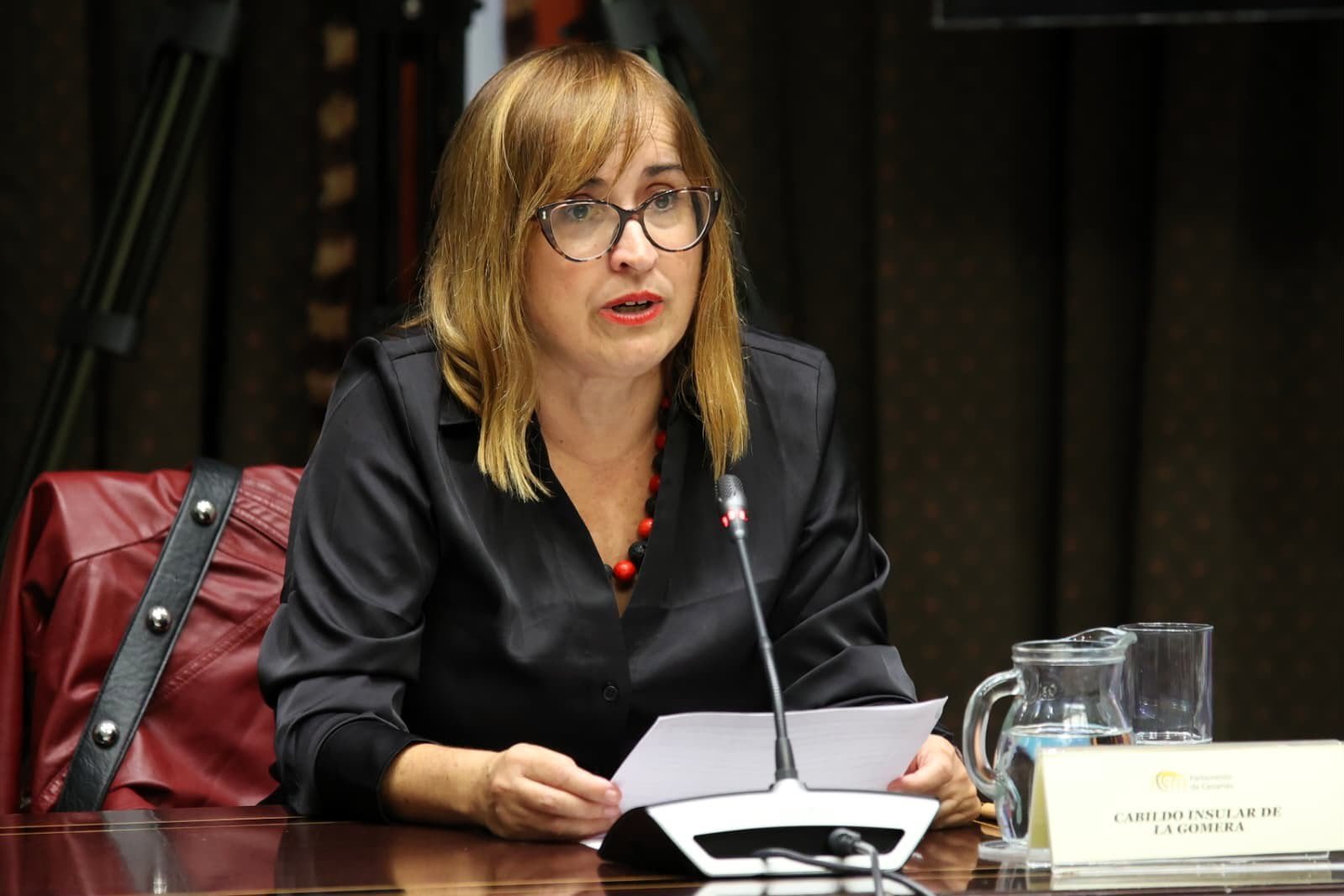
The first vice president and insular advisor of the Interior Regime and Insular Heritage of the Cabildo of La Gomera, Adasat Reyes, defended this Tuesday, in the General Commission of Insular Councils of the Parliament of the Canary Islands, the need to apply an agile and proportionate response to the effects that the crisis in the Middle East is generating on the Canary Islands economy, especially in a remote, fragmented and highly dependent territory on the outside like the archipelago.
During his intervention to assess the decree law of the Government of the Canary Islands, by which measures are adopted as a consequence of the crisis in the Middle East, Reyes stressed that the current scenario has intensified economic uncertainty, with direct effects on energy markets, supply chains and strategic sectors for the islands.
In this sense, he pointed out that the rise in fuel prices, the increase in logistics costs and the pressure on activities such as transport, tourism and the primary sector force administrations to act quickly.
“The situation that gives rise to this decree law is complex and worrying,” he stated. “We are not facing an ordinary structural situation, but rather a changing scenario that requires a certain agility in decision-making by governments and public administrations.”
The island representative appreciated that the decree articulates an immediate response through three large blocks of measures. Firstly, fiscal measures aimed at alleviating costs, including the temporary extension of the zero IGIC rate to certain energy products and some basic foods, in addition to the modification of the small business regime to facilitate their access. Secondly, an extraordinary provision for the industrial sector with the aim of compensating for the loss of competitiveness derived from increased costs. And, finally, direct aid to the primary sector to face the increase in the cost of inputs, feed and energy and logistics costs.
Reyes also highlighted that the decree incorporates an aspect that is “especially relevant” for islands like La Gomera: the recognition of double insularity and the greater extra costs borne by non-capital territories. “This is not a minor issue, but rather the daily reality of everyday life,” he stressed.
However, the first vice president warned that the temporary reduction in tax rates, even if justified from an economic and social point of view, may have an indirect effect on the resources of the councils by translating into lower collection within the Canarian financing block. “We are facing an indirect effect, but with real implications on our financial capacity,” he said.
Likewise, he recalled that, although the decree does not attribute new direct powers to the councils, it does affect areas in which these corporations play a relevant role, such as supporting the primary sector or institutional coordination in industrial matters. For this reason, he defended the need to maintain permanent surveillance over the evolution of the international context and to review the duration and scope of the measures if instability continues.
“In times like this, the important thing is that the institutions transmit stability and responsibility,” concluded Reyes, who reiterated the willingness of the Cabildo of La Gomera to collaborate with the rest of the administrations to protect citizens and the most exposed economic sectors. The Gomero representative closed his speech with “a resounding no to the war” and with a message of solidarity with the victims of the conflict.