The first vice president of the Cabildo, Adasat Reyes, highlights that 16,061 people with their approved Individual Care Program (PIA) still do not receive an effective benefit in the Canary Islands
The insular Corporation values the measures to expedite the creation and accreditation of social and health resources and demands sufficient and stable financing
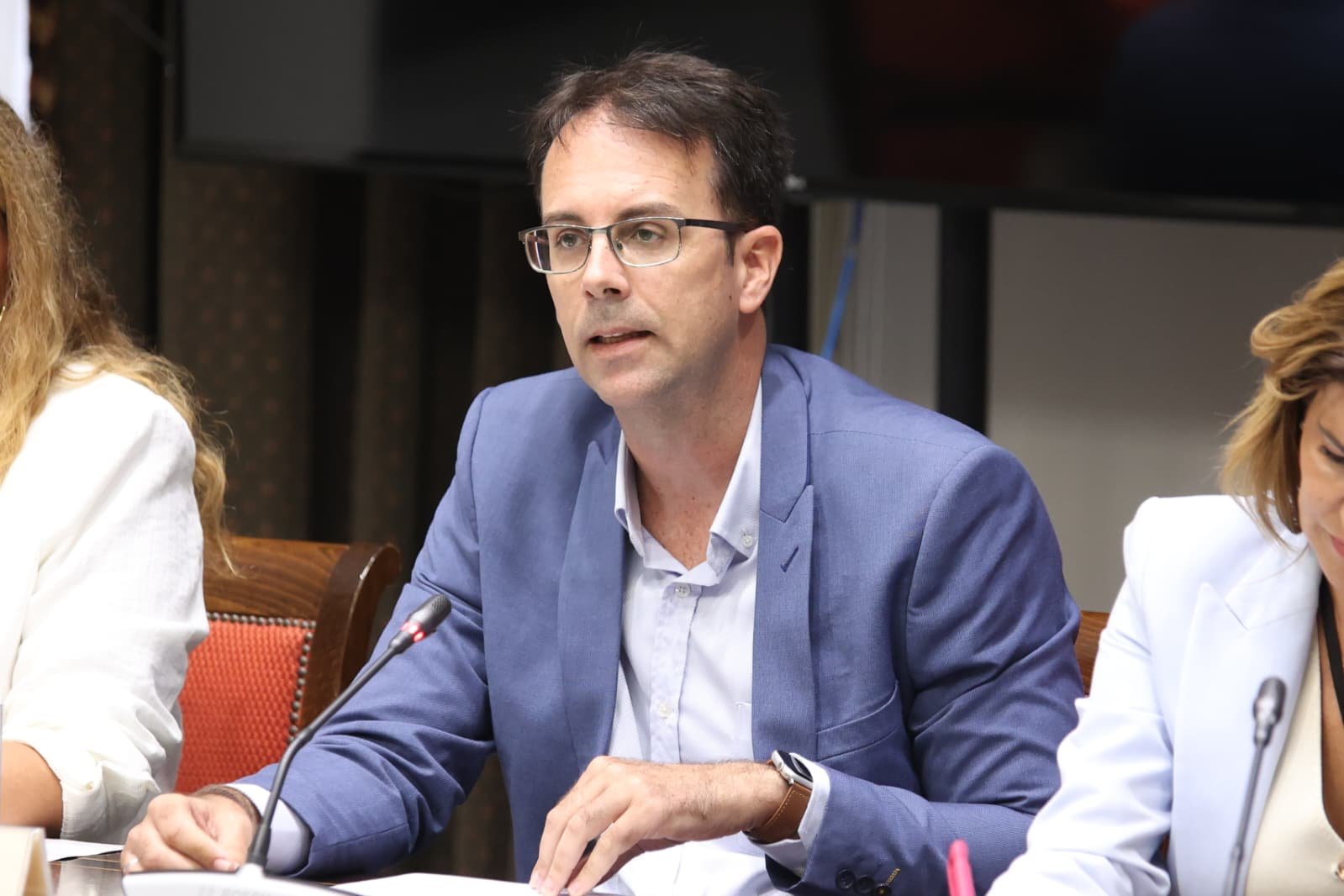
The first vice president and insular advisor of the Interior Regime and Insular Heritage of the Cabildo of La Gomera, Adasat Reyes, has positively valued this Thursday, in the General Commission of Insular Councils of the Parliament of the Canary Islands, the measures incorporated by the autonomous Government to speed up care for people in a situation of dependency, while calling for strengthening coordination between administrations, accelerating the launch of new places and guaranteeing sufficient and stable financing.
During his intervention to assess Decree Law 5/2026, which incorporates fiscal measures, actions related to the management of European Next Generation funds and modifications in the operation, accreditation and quality of centers and services linked to personal autonomy and dependency, Reyes placed this last area as one of the main challenges that the Canary Islands must face.
According to the data collected in the regulation itself, as of March 31, 2026, the Canary Islands had 71,093 people with an approved Individual Care Program (PIA). Of them, 55,032 already received an effective benefit, while another 16,061 still could not make effective the recognized right.
“We have made progress in the recognition of dependency, but now we have to ensure that this recognition really becomes a residential place, a place in a day center, home care or the corresponding resource in each case,” he said.
The first vice president considered it appropriate that the decree allows the Autonomous Community to organize and manage places and resources when there is insufficiency, delay in access, social urgency, need for continuity of care or territorial imbalances, preserving the powers of the councils over the resources of their ownership and management.
“It is not about replacing the councils, but about adding capacities between both institutions,” said Reyes, who also valued the simplification of the operating procedures and accreditation of centers. In this sense, he pointed out that the responsible declaration can facilitate a faster incorporation of resources, maintaining the inspection, control and verification powers of the Administration.
Reyes also insisted that planning must take into account the specific reality of each territory. “Organizing a network of services on a capital island is not the same as organizing it on an island with a smaller population, greater territorial dispersion and a more limited supply of specialized centers,” he noted.
For this reason, he advocated taking advantage of new tools to “strengthen joint planning, share information, accelerate new places and guarantee sufficient and stable financing.”
In tax matters, Reyes highlighted that the proposed modifications are “very specific and fundamentally technical” adjustments and not a reform of the Canary Islands tax system. In the opinion of the Cabildo, they should not cause significant damage to the resources of the island corporations, although it defended monitoring within the usual financial coordination mechanisms between the Government of the Canary Islands and the councils.
The greater flexibility introduced for the execution and justification of the Next Generation European funds was also considered positive, by facilitating the administrative and budgetary management of public institutions.
“The final objective has to be simple: that no person with a recognized dependency situation has to wait indefinitely to receive the care to which they are entitled,” said Reyes, who called for coordination, resources, planning and shared responsibility between the Government of the Canary Islands and the councils.