The spokesperson for the Gomera political party, Aarón Rodríguez Ramos, denounces that the data from the 2025 Annual Report of the Economic and Social Council of the Canary Islands shows the critical situation of La Gomera in agriculture, livestock and fishing.
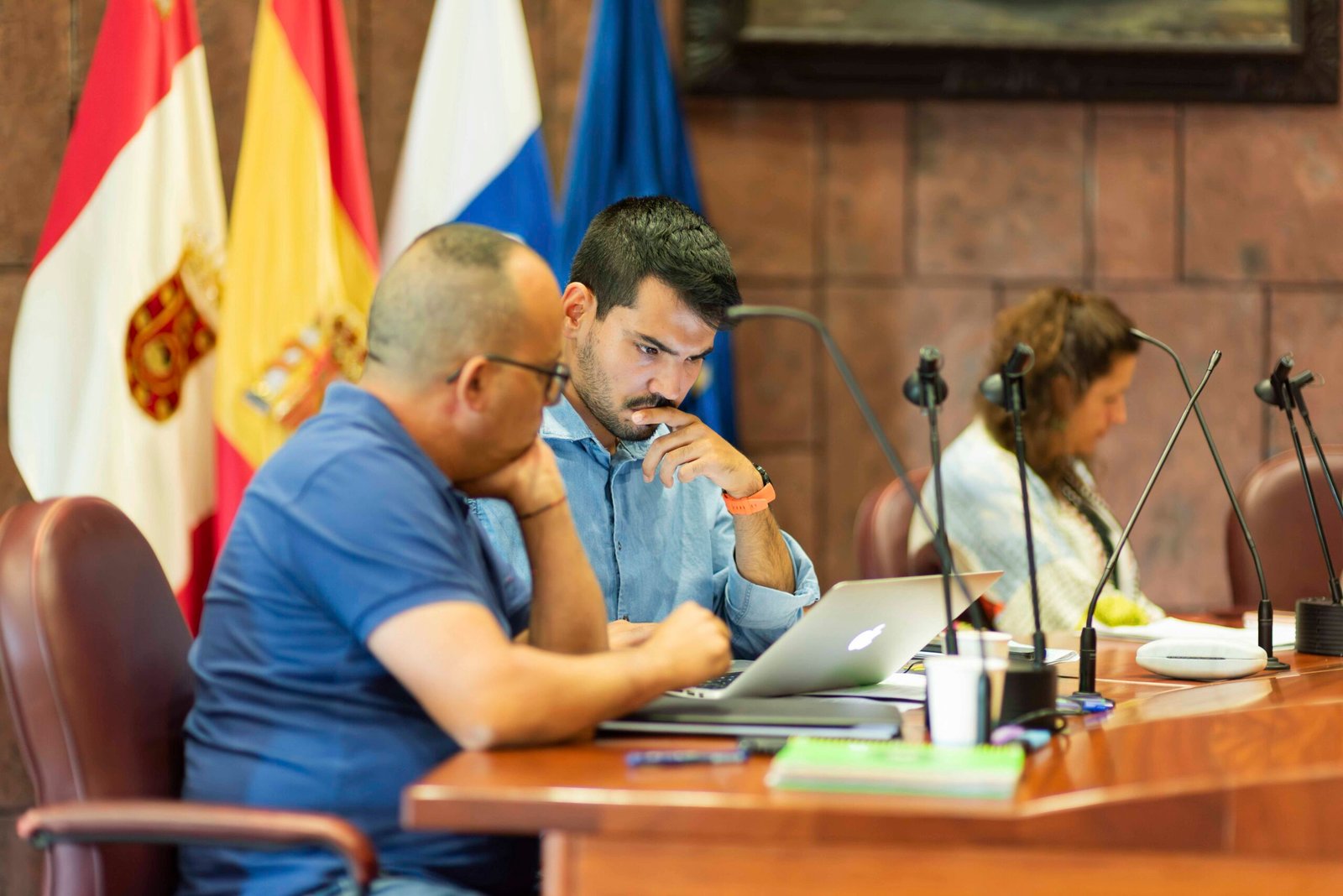
Initiative for La Gomera (IxLG) has expressed its deep concern about the situation of the primary sector on the island, which according to the data collected in the 2025 Annual Report of the Economic and Social Council of the Canary Islands, published today, presents critical indicators that are systematically lower than the rest of the archipelago.
The spokesperson for the formation, Aarón Rodríguez Ramos, has pointed out that "the numbers are devastating and reflect three decades of institutional abandonment and public policies that have turned their backs on our countryside and our sea." Thus, La Gomera registers the greatest decline in fishing production of all the Canary Islands. According to the data in the report, the island has gone from producing 227,380 kilos in 2021 to only 73,768 kilos in 2025, which represents a drop of 67.56%. "While El Hierro and La Palma have managed to maintain or even increase their fishing production, La Gomera has lost more than two thirds of its activity in just four years," lamented Rodríguez Ramos. In terms of relative weight, La Gomera barely represents 1.46% of the total fishing production of the Canary Islands in 2025, the lowest figure in the entire archipelago, even below El Hierro.
The data on cultivated area confirm the agricultural marginality of La Gomera within the Canary Islands. With 874 hectares in 2024, the island represents only 2.2% of the total cultivated area of the archipelago, only ahead of Fuerteventura (2.0%) and less than half of El Hierro (4.8%). Furthermore, La Gomera is one of the few islands, along with Gran Canaria, that has reduced its cultivated area between 2022 and 2024, with a variation of -1.61%, in contrast to the growth experienced by Lanzarote (+29.11%) or El Hierro (+0.46%).
In the banana sector, strategic for the Canary Islands economy, La Gomera stands out negatively as the only island with a negative variation in the period 2021-2024. Production has fallen by -17.62%, going from 4,698 tons in 2021 to 3,870 in 2024. This evolution contrasts drastically with the behavior of the rest of the islands with increases of 96.67% in Fuerteventura, 13.59% in El Hierro, 10.19% in Lanzarote, 6.84% in La Palma, 4.82% in Gran Canaria and up to 0.11% in Tenerife.
«We are the only island that has gone backwards in banana production. This is not a coincidence, it is the result of decades without real investment in irrigation infrastructure, without real support for small producers, without a policy of generational replacement and promotion of agricultural entrepreneurship and without a coherent territorial strategy," denounced the spokesperson for the Initiative for La Gomera (IxLG).
Regarding the data on livestock activity, the situation is alarming and places La Gomera in last place in the archipelago, with only 4,533 heads in 2024, which represents only 1.51% of the total in the Canary Islands. For the political formation, it is worrying compared to El Hierro, an island with fewer economic resources and surface area, which nevertheless had 10,611 head of cattle in 2024, more than double that of La Gomera.
The spokesperson for the Initiative for La Gomera (IxLG), Aarón Rodríguez Ramos, has indicated that an urgent shock plan is needed to recover the primary sector in La Gomera. The priority must be public policies that improve direct marketing channels, to favor the arrival of economic benefits to producers without intermediaries, advance in the improvement of irrigation water infrastructure and avoid water losses, the implementation of awareness campaigns, advice and aid in matters of agricultural and fishing entrepreneurship, as well as a commitment to the improvement of fishing infrastructure and common services.
«We cannot continue looking the other way. La Gomera needs public policies that prioritize those who work the land and the sea. The CES data is a diagnosis that should embarrass those who have been managing this island for decades," concluded Rodríguez Ramos.