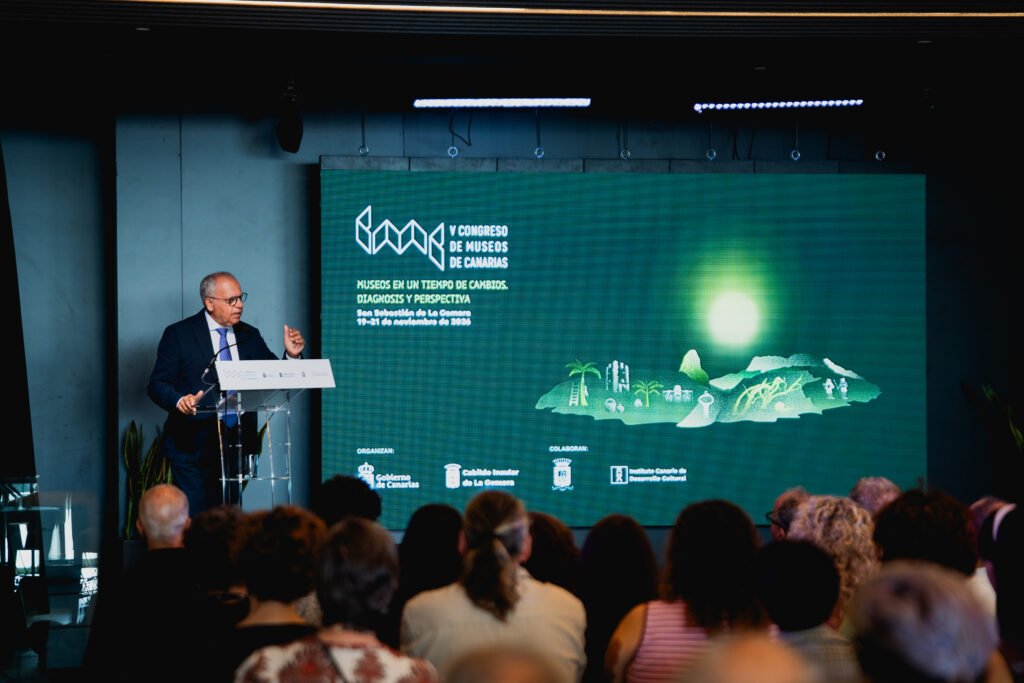
The event, which will be held until Saturday, November 21, will address tomorrow the conservation of collections, intangible heritage and the commitment to the Dispersed Canarian Legacy
The last day will be dedicated to the conclusions of the congress and the planning of the Canary Islands Museum Network
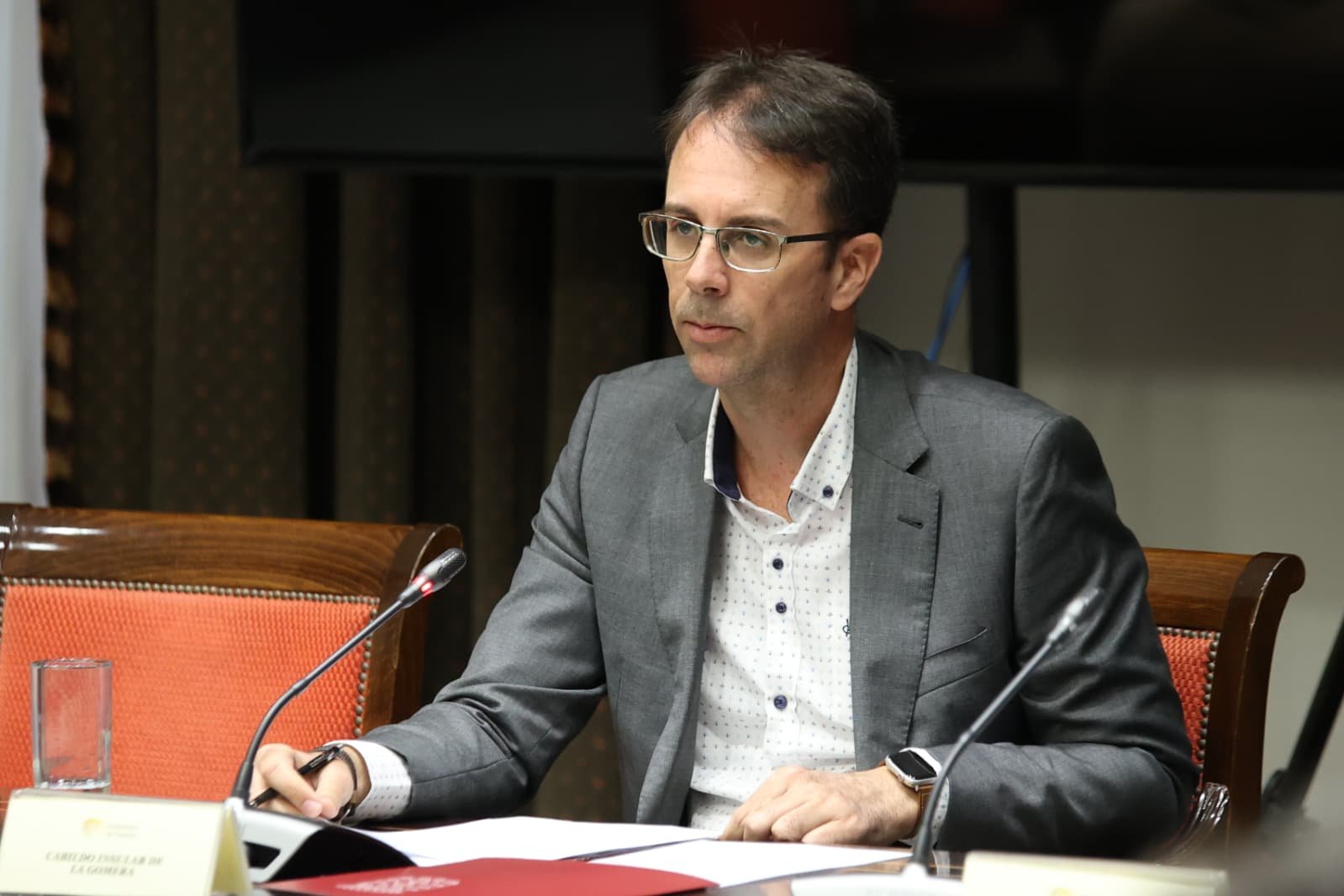
The V Congress of Museums of the Canary Islands <https://www.congresodemuseosdecanarias2026.com/> This Thursday it celebrated its institutional opening in La Gomera, where it brings together more than a hundred professionals from the museum sector of the archipelago to analyze the challenges faced by these institutions and share experiences about their present and future. Under the motto “The museums of the Canary Islands in a time of transformation”, the meeting takes place until next Saturday, November 21, promoted by the General Directorate of Culture and Cultural Heritage of the Government of the Canary Islands, in collaboration with the Island Council of La Gomera.
The president of the Cabildo of La Gomera, Casimiro Curbelo Curbelo, participated in the opening ceremony; the Minister of Universities, Science and Innovation and Culture of the Government of the Canary Islands, Migdalia Machín Tavío; the mayor of San Sebastián de La Gomera, Angélica Belén Padilla; and the coordinator of the Canary Islands Museum Network, Juan Alejandro Lorenzo Lima.
During his speech, Machín stressed the importance of cultural policies taking into account the territorial diversity of the archipelago and highlighted the Government's commitment to decentralizing initiatives related to cultural heritage. "We want institutional activity, professional meetings and spaces for reflection to reach all of the islands. Each territory must be the protagonist of cultural policies, because there is no single museum model nor a single way of relating to heritage."
The counselor also stressed the need to pay specific attention to small, local and rural museums, which constitute an essential part of the Canary Islands museum system, as well as to the professionals who support their daily activity. In this sense, he recalled that museums are much more than conservation and exhibition spaces: they are institutions that research, educate, transmit knowledge and maintain a direct relationship with the memory and identity of communities.
Machín linked this call with the intense activity that the General Directorate of Culture and Cultural Heritage has been developing, with initiatives that combine intervention in the territory and the external projection of the Canarian heritage. As an example, he mentioned the recent international symposium Heritage Diasporas, held in Tenerife, which brought together specialists and institutions to debate the dispersion of archaeological assets, restitution policies and the responsibility of museums with cultural legacies.
“They are different initiatives, but they respond to the same conviction: cultural heritage needs research, knowledge, cooperation and sustained public policies,” highlighted the counselor.
The president of the Cabildo highlighted the importance of La Gomera hosting this Congress, "since it represents an opportunity to vindicate the role of non-capital islands in the conservation and dissemination of the cultural heritage of the Canary Islands." Likewise, he highlighted the historical, ethnographic and intangible wealth of the island and the need to bring it closer to new generations.
Along these lines, he reaffirmed the Council's commitment to strengthening the Island Network of Museums and Interpretation Centers, betting on spaces that are "more open, participatory and connected to society." In addition, he stressed the importance of institutional cooperation to guarantee equal access to culture on all islands.
For her part, the mayor thanked the celebration of the biennial meeting in her municipality “as a work tool for the entire museum sector and the need to continue advancing in cooperation between centers and institutions,” she mentioned.
Second day
The programming will continue tomorrow, Friday, November 20, with a day that will delve into two major areas: intangible cultural heritage and collection conservation and research policies.
The session will begin with two debate spaces dedicated, respectively, to the incorporation of intangible heritage to museum narratives and to conservation and research policies. Participants will reflect on the criteria that determine what is conserved, why and for whom, as well as on research as an essential part of museum activity.
Next, the plenary table “Around objects” will bring together different professional communications related to the emotional dimension of collections, the safeguarding of intangible heritage, museum research and the conservation of scientific and heritage collections.
One of the highlights of the day will take place at 1:30 p.m., with a special session dedicated to “Commitment to the Dispersed Canarian Legacy”, which will include reading, debate and proposal for institutional ratification. This initiative will continue the work carried out by the Government of the Canary Islands in the field of research, knowledge and vindication of the heritage assets of the archipelago that are located outside the islands.
In the afternoon, the congress will address the challenges of museums in diverse territorial contexts and their relationship with tourism. The debates will focus on the transformative capacity of these institutions, the particularities of rural interpretation centers and the balance between their tourist dimension and their cultural and educational function.
The day will conclude with the plenary table “Context and interaction”, which will allow sharing experiences on social innovation, community management, access to culture and collaboration between centers.
Closing day
On Saturday, November 21, the congress will celebrate its last day with a session especially focused on networking and the future prospects of the archipelago's museum system.
At 9:30 a.m., Juan Alejandro Lorenzo Lima, from the General Directorate of Culture and Cultural Heritage, will offer the conference In an internal key: more incentives for the network, dedicated to the organization, planning and updated information on the Canary Islands Museum Network.
Subsequently, the conclusions of the meeting will be presented and discussed, which will collect the main contributions of the participating professionals during the three days.
The program will conclude with the closing presentation by Aina Ferrero Horrach, from the Museu del Calçat i de la Indústria of the City Council of Inca, entitled "Desacralizing the museum. 12+1 heresies to get closer to society", before the institutional closing ceremony.
The V Congress of Museums of the Canary Islands is thus configured as a space for reflection and professional cooperation to address the changes that affect these institutions and reinforce their role as spaces of knowledge, conservation, education and citizen participation on all the islands.