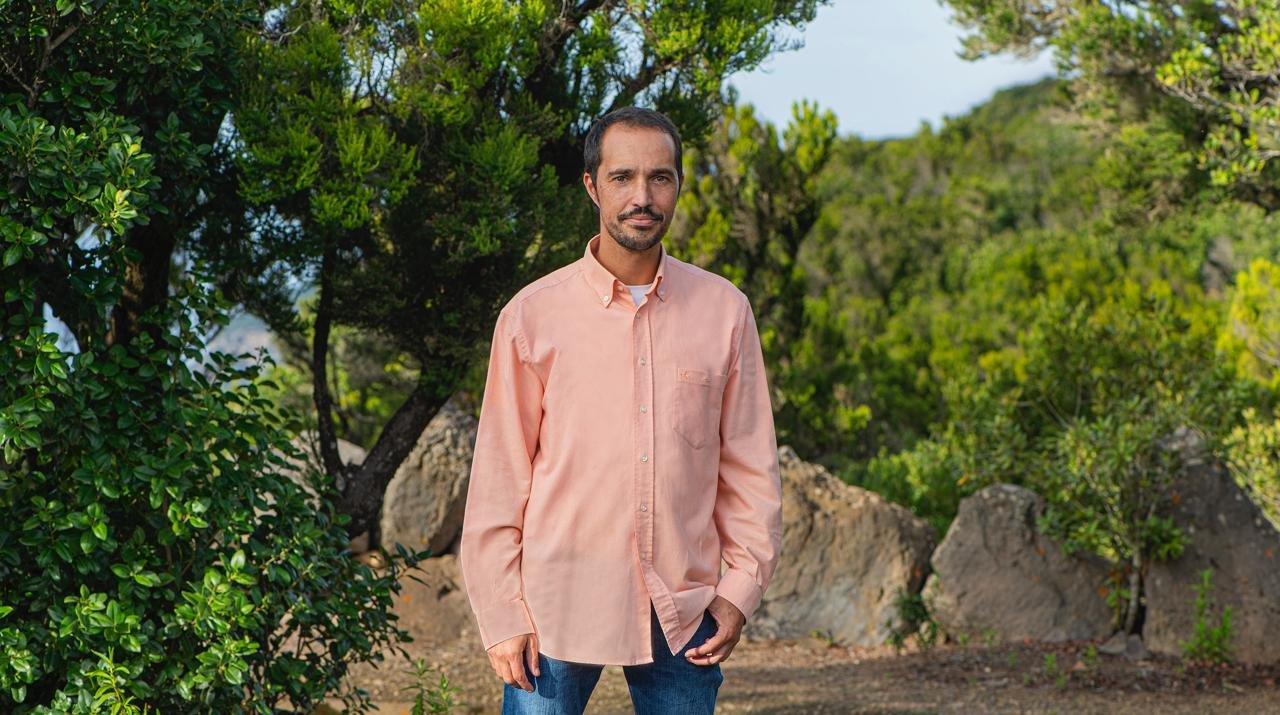
Professor Antonio Tejera Gaspar gave the presentation '1493: The colonization of the Antilles with animals and plants from La Gomera', in the Plenary Hall of the insular Institution
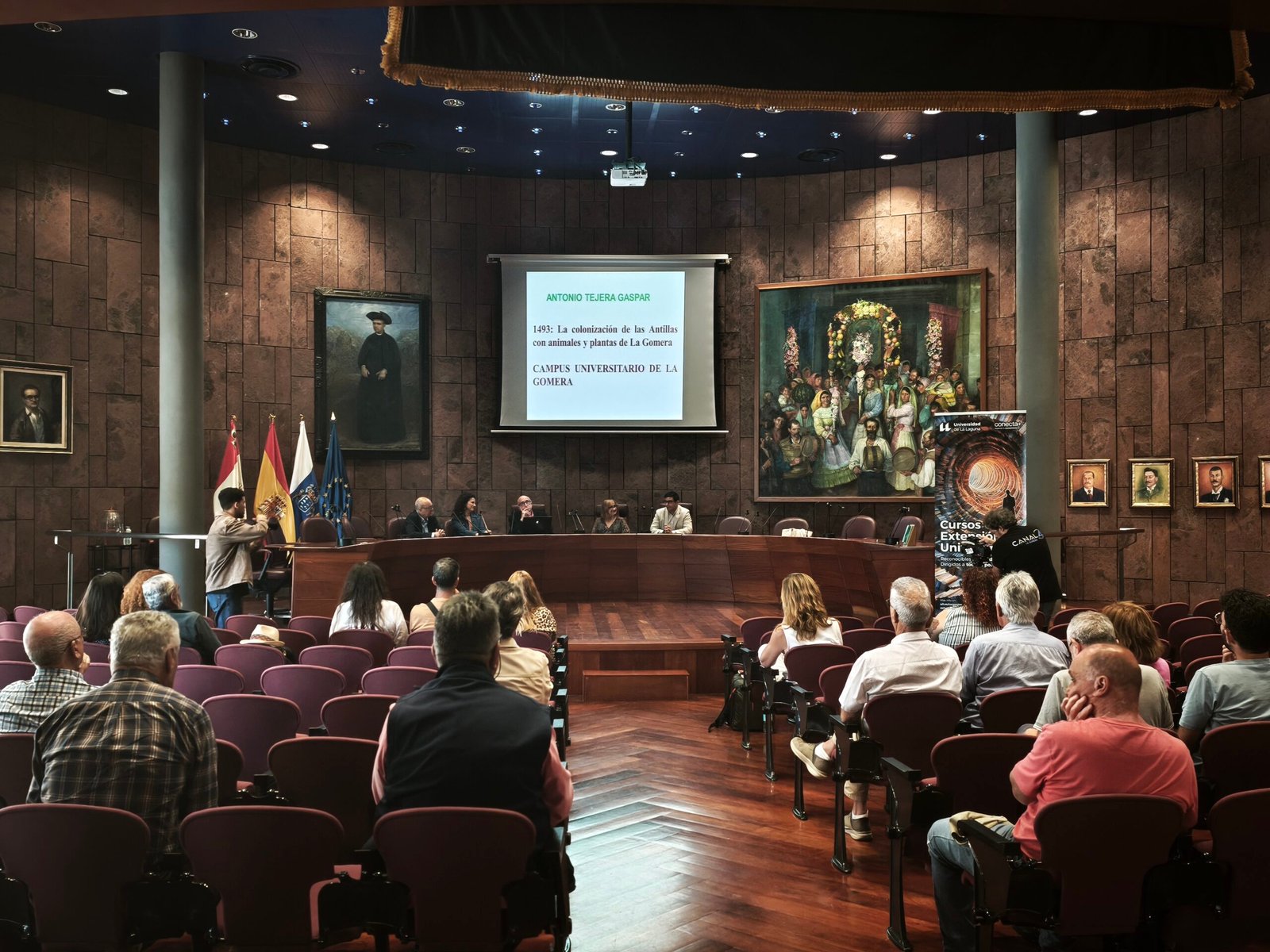
The Cabildo of La Gomera and the University of La Laguna, through its General Foundation, inaugurated, this Thursday, the La Gomera 2026 Campus with the conference '1493: The colonization of the Antilles with animals and plants from La Gomera', given by Professor Antonio Tejera Gaspar in the Plenary Hall of the insular Institution.
The presentation addressed the strategic role of La Gomera as a platform for biological transfer to the New World, analyzing how animal and plant species from the Canary Islands contributed to the implementation of the colonial model in the Caribbean and to the configuration of new agrarian landscapes and productive systems in the Antilles.
The island's Minister of Education and Culture, Rosa Elena García, highlighted that "the La Gomera Campus was born with the vocation of bringing the public university, training and knowledge closer to the entire Gomera citizenry, with a stable, diverse program linked to the current challenges and the identity of the island."
Furthermore, García thanked the presence of Antonio Tejera Gaspar, “an undisputed reference in the field of archaeology, history and heritage of the Canary Islands”, and stressed that his inaugural conference “allowed us to look at La Gomera from an Atlantic perspective, understanding that the history of a small island can have a universal dimension”.
For her part, the vice-rector of Culture and University Extension, Isabel Karely León, stressed that the La Gomera Campus involves “going much further than a seasonal university”, by transforming the traditional Summer University into a broader initiative, in which university extension actions are combined with cultural and leisure proposals to reinforce the presence of the University of La Laguna on the island throughout the year.
Thus, he highlighted that the academic institution maintains "more than ever" its commitment to La Gomera, defending university extension as a tool to "open the doors of the university and bring knowledge to all people, wherever they reside, without prerequisites or demands", which he defined as "the maximum democratization of knowledge in non-capital islands."
Antonio Tejera Gaspar, professor of Archeology and one of the most prominent figures in the study of the pre-Hispanic past of the Canary Islands, highlighted that "La Gomera is associated with the first voyage of Columbus, with the definitive departure from the roadstead of San Sebastián in 1492, but there is a much less known area, which is what happens on the second voyage in 1493."
In this sense, he explained that the island played an essential role in the shipment of animals, plants and seeds destined for La Isabela, in the current Dominican Republic and Haiti, which represented "the beginning of a new world with a fundamental reference in La Gomera."
Likewise, Tejera Gaspar pointed out that, from that moment, the island and the Canary Islands became “the pantry of America”, and defended “the obligation to know and disseminate” the historical, economic, social and cultural role that La Gomera had in the first Atlantic connections with the New World.
Training offer and registration
The La Gomera Campus contemplates the implementation of a series of courses recognizable by ECTS credits, as well as workshops, parallel activities and university micro-credentials. Programming is open to anyone interested, with no prerequisites required. Registration for the La Gomera 2026 Campus courses is done online through the page available at this link.