In addition to the human resources, two aerial means and around twenty vehicles are added.
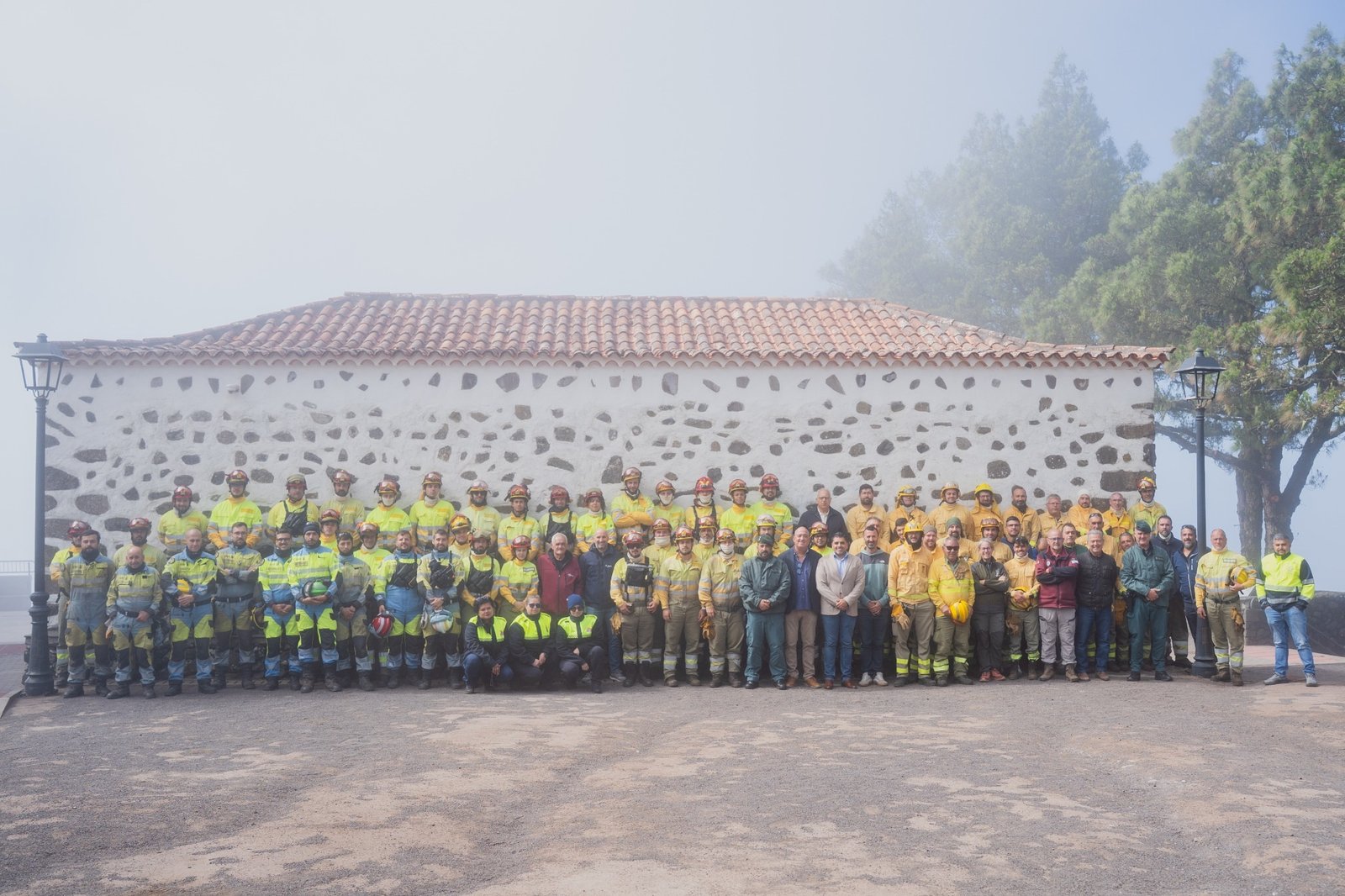
In 2026, the island device reinforces the protection of the mountains, ravines and population centers of La Gomera, with special attention to the Garajonay National Park and the highest risk areas.
This Monday, the Cabildo of La Gomera presented the new campaign to prevent and extinguish forest fires for 2026. This is an operation with more than 200 personnel from different administrations, collaborating entities and volunteer groups, in addition to an investment of 2.5 million euros for the annual campaign.
The president of the Cabildo, Casimiro Curbelo, stressed during the presentation that this campaign "replaces prevention, coordination and rapid response as absolute priorities to protect our mountains, our hamlets and one of the most important natural heritages in the world such as the Garajonay National Park."
Curbelo also appealed to citizen responsibility, since "we must take extreme measures, since any carelessness can trigger a fire with very serious consequences." "That is why we ask for prudence, common sense and compliance with the recommendations when the protocols are activated. The conservation of La Gomera is a shared responsibility," he stated.
Likewise, the island president valued the work of the human resources that are part of the operation, among them the State Security Corps and Forces, Volunteer Firefighters of Valle Gran Rey, Volunteer Firefighters of La Gomera, Civil Protection, Anaga Emergency Aid, Foundation of General Socio-Sanitary Services of La Gomera, Red Cross, Tragsa, EIRIF, Environment Unit of the Cabildo and Garajonay National Park.
Device for 2026
The device, in force from today until October 31, has around twenty firefighting vehicles and two aerial means based on the island, to which surveillance, coordination and supply resources are added, such as drones and portable rafts to facilitate the operation of the aerial means.
The entire operation is coordinated through CECOPIN and functions as a single team, with personnel from different administrations and entities that act under criteria of security, effectiveness and organization. Preventive work has been intensified in ravines, sensitive areas and areas of interface between mountains and population, with special attention to Vallehermoso, Hermigua, Valle Gran Rey and San Sebastián, as well as the hamlets in the midlands and high areas.
In 2026, the use of drones in surveillance and coordination tasks will continue, as well as portable rafts to facilitate the supply of aerial means. In addition, training actions aimed at security forces, volunteers and technical personnel are reinforced, with the aim of improving response to emergency situations.
For his part, the Emergency Minister, Héctor Cabrera, insisted that the protection of the territory requires institutional cooperation, continuity and citizen commitment. For this reason, he recalled the importance of cleaning private plots, creating safety strips and respecting the instructions of the authorities, especially in the event of episodes of heat or wind that could increase the risk of forest fires.
Actions developed and roadmap for 2026
The 2026 campaign continues planning that is not limited to the summer months, but is developed throughout the year through conservation, prevention, maintenance and risk reduction actions. In the last two years, more than 8 million euros have been invested in environmental conservation actions, with more than 200 actions carried out on the island.
Curbelo highlighted that prevention "is a permanent work, which includes cleaning, maintenance, monitoring, elimination of invasive species, emergency response and creation of security cordons." In this sense, he highlighted the role of volunteers and the teams that participate each year in surveillance and support work, since "their involvement is key to reinforcing the security of the island and guaranteeing an effective response to any incident."
During 2025, different interventions linked to the prevention and improvement of the natural environment were completed or executed. Among them, the completion of a European project of 700,000 euros for the elimination of the “cat tail” stands out; the forestry treatment of Majona, with 360,000 euros; the action in the Ingenio-Macayo ravine, financed with 354,000 euros through the European Agricultural Fund for Rural Development; and the repair of the Chipude fire depot, with an investment of 89,000 euros.
Work in ravines has also continued, with an annual payment of 2.5 million euros, destined to maintain prevention work and eliminate exotic species. Added to this is the “Replantea” project, endowed with 1.6 million euros of NextGenerationEU funds, aimed at the control of common sugarcane and the renaturalization of channels in ravines of Hermigua and Valle Gran Rey.