Curbelo demands new investments in the Senate in the face of the serious social and economic crisis that the Canary Islands are going through
The president of the Cabildo of La Gomera calls for compliance with the agreements established in the REF and the Statute of Autonomy of the Canary Islands to correct the structural imbalances suffered by the islands
Curbelo: "From the non-capital islands we do not ask for more than what is rightfully ours. It is often ignored that the cost of living and the limitations of access to basic services are very different and worse in La Gomera, La Palma and El Hierro"
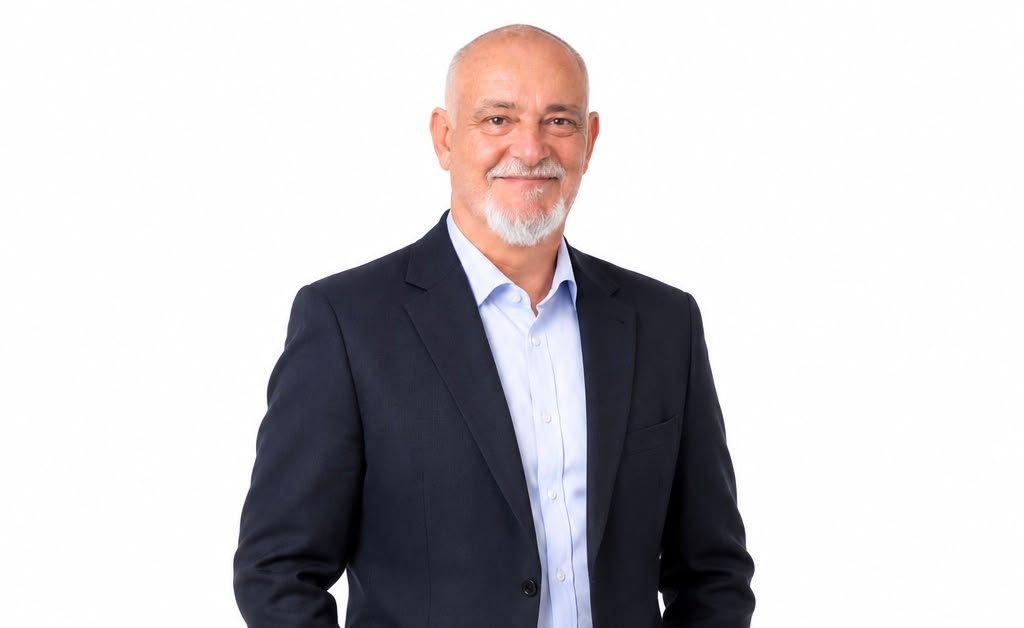
The president of the Cabildo of La Gomera, Casimiro Curbelo, appeared, this Thursday, at the Study Presentation on insularity held by the Senate to study the consequences that remoteness and the condition of islands have on the economic and social development of the Canary Islands. In this context, he demanded new investments in the face of the social and economic crisis that the Archipelago is going through, and asked to articulate financing policies capable of addressing its singularities to comply with the provisions of the Economic and Fiscal Regime, as well as the Statute of Autonomy.
"There is a centralism of Madrid with respect to the Canary Islands, but there is also another of the capital islands with respect to the non-capital islands. Situations that have not been corrected, demonstrating that the measures taken have been insufficient," he stated at the beginning of his speech.
"The conditions of remoteness, insularity and economic dependence seriously harm the development of the Canary Islands. We are not talking about privileges, but about having the same rights as the rest of the country's citizens. This was already included in the Free Ports Decree in 1852 and later the first REF Law of 1972. Now it is also established by our basic norm of coexistence, the Constitution," he argued.
The Gomero leader stated that quality public services must be linked to a reasonable tax burden on economic activities and its citizens, "for which it is necessary to consider a financing model for the Canary Islands that meets the criteria of solidarity and that modifies the cost of living in this territory."
In this sense, he argued that the high unemployment rate, which doubles the national average, as well as the indicators of poverty and social exclusion, whose percentage exceeds 35% of the Canarian population, require specific attention that addresses these structural problems that have worsened with the health crisis. “Life in this community is much more expensive and difficult than on the continent, so the structural conditions are not temporary, but permanent,” he added.
"Spain, first, and Europe, later, have been aware of the problems suffered by European citizens who live far from the continent, and this is reflected in the unique treatment established for the Outermost Regions. However, there is a long way to go," he said.
Double insularity: the extra cost of living in La Gomera, La Palma and El Hierro
Curbelo warned that in addition to the structural deficits of island status, there are those created from the composition of the autonomous community itself. "On the one hand, there are the two large capital islands, densely populated, which concentrate most of the economic activities and act as interlands for goods and travelers. And, on the other, the non-capital islands, less populated and with subsidiary markets and a high dependence on the outside world," he explained.
“In other words, knowing that the entire Canary Islands are poor, there are Canarians who are even poorer than the poor on the capital islands,” said the Gomero president, who exemplified this situation by pointing to the concentration of large infrastructures, regional government headquarters and successful productive activities on these two islands. “It is a palpable fact, only 125,000 people reside on the non-capital islands, 5.6% of the Canarian population,” he noted.
The consequences of double insularity are manifested in the cost of living. “If the Canary Islands already have one of the most expensive shopping baskets in Spain, in La Gomera essential products are more expensive, transportation limitations are palpable and access to health and educational services are very different and worse than in the capital cities,” argued Curbelo.
In this sense, he urged legislation taking into consideration the Canarian differential fact that, on occasions, has not been a factor taken into account. “The most recent example is found in the General State Budget Law that increased port taxes on the islands, putting a brake on the incipient development of La Gomera, but the most striking thing is the debate that arises every year about the transportation bonus, which is a right and not a privilege,” he reaffirmed.
Unity in the face of the migration crisis
At the end of his speech, Curbelo took the opportunity to reiterate the need for support for the Canary Islands with respect to the migration crisis, which last year alone received more than 22,000 immigrants to continue on their way to Europe, for which he requested the support of the Upper House to address this reality that the Canary Islands face. "I have already said it before, our islands cannot be prisons and, therefore, I insist that the European Union and the State must address, jointly, this dramatic situation that has exceeded all our forecasts and management capacity, so seeing the work carried out by this Senate Commission, it comforts us to think that we are not alone," he highlighted.