-
The Ministry inaugurates the XI Macaronesia Forestry Conference at the La Gomera Town Hall, with the participation of Azores, Madeira and Cape Verde
-
The international meeting addresses adaptation to climate change, the conservation of biodiversity and the protection of laurel forests, with a field visit to the Garajonay National Park

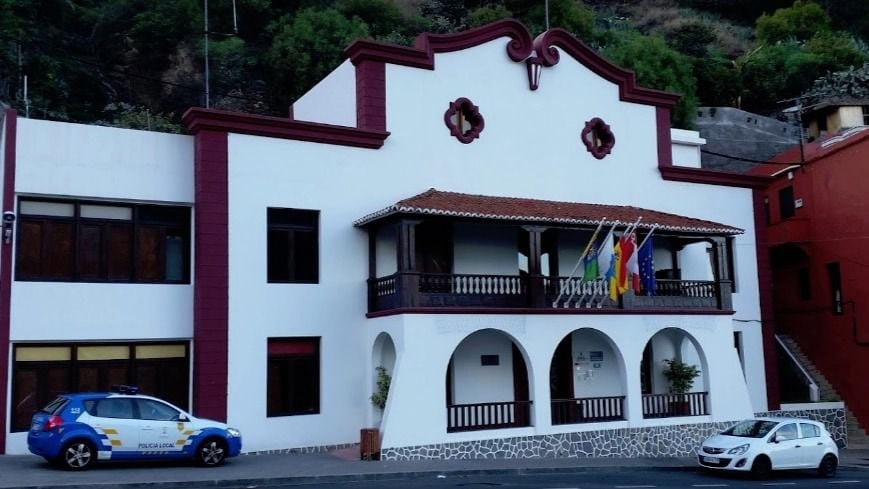
The Department of Ecological Transition and Energy of the Government of the Canary Islands, led by Mariano H. Zapata, inaugurates the XI Macaronesia Forestry Conference in the plenary hall of the Cabildo de La Gomera. An international meeting that will bring together, until November 28, delegations from the Azores, Madeira, Cape Verde and the Canary Islands to address the challenges of the forestry sector in the context of climate change and the unique natural wealth of the region.
The opening ceremony was chaired by the Minister of Ecological Transition and Energy, Mariano H. Zapata; accompanied by the vice president of the Cabildo of La Gomera, Adasat Reyes; the Environment delegate of the Government of Cape Verde, Luisa Morais; the Deputy Director General of Forestry Policy and Fight against Desertification of Miteco, Elsa Enríquez; the Regional Director of Forest Resources and Territorial Planning of the Government of Azores, Nuno Sousa; and the President of the Board of Directors of the Forest Institute of Nature Conservation of the Government of Madeira, Manuel Filipe.
Likewise, representatives of the seven island councils, the Gomero town councils and various entities and companies in the forestry sector attended the meeting.
Zapata stressed during his speech that "Today the Canary Islands assume a leading role in forestry cooperation in Macaronesia, putting our experience and our common challenges at the service of a shared strategy against climate change." The counselor highlighted that "the forest management carried out on islands such as La Gomera, with spaces as emblematic as the Garajonay National Park, is an example of how to protect a unique natural heritage and, at the same time, adapt to an increasingly demanding environmental reality."
The conferences, organized under the initiative of the Ministry, are framed in the paradigm of climate change and seek to strengthen cooperation between the four Macaronesian archipelagos to develop adaptation mechanisms, promote the use of new technologies and improve knowledge about the functioning of forest ecosystems in Atlantic island territories.
The first vice president of the Cabildo of La Gomera, Adasat Reyes, highlighted at the opening of the XI Macaronesia Forestry Conference that this meeting "replaces our islands at the center of the scientific and technical dialogue on the sustainable management of forests", underlining that the presence of specialists from the Canary Islands, Madeira, Azores and Cape Verde reflects "a shared Atlantic root" and a common commitment to the conservation of the territory. Likewise, he recalled that sustainability, innovation and adaptation are essential pillars in the face of the challenges of climate change and called for strengthening cooperation between archipelagos to consolidate a joint vision of the future for the mountains of the region.
The program of the conference will include a field visit to the Garajonay National Park, where attendees will be able to learn about its most significant enclaves, as well as the recovery work carried out after the great fire of 2012.
XI Forestry Days of Macaronesia
These days have been held jointly since 2006, with a periodicity of two to three years, rotating among the archipelagos of Macaronesia, and highlighted "the continuity of a technical and political forum that allows us to share data, experiences and good practices in forest planning, sustainable management, fire prevention and biodiversity conservation."
The main thematic axes that will be addressed in the theoretical sessions include forest planning, sustainable harvesting and management, monitoring of forest habitats, public use of forest spaces, biodiversity conservation and the role of ecosystem services. Likewise, problems such as desertification, forest fires and risk prevention and mitigation strategies will be discussed.